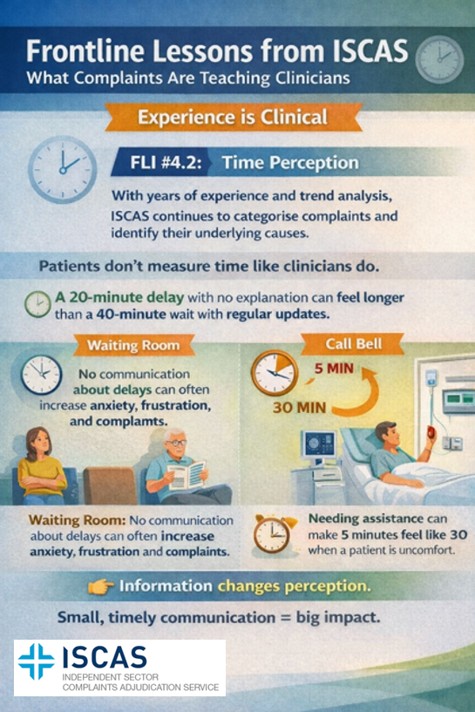
Experience is Clinical
FLI#4.2: Time Perception
With years of experience and ongoing trend analysis, ISCAS continues to categorise complaints and identify their underlying causes.
One consistent insight: patients don’t experience time in the same way clinicians do.
A 20-minute delay with no explanation can feel longer than a 40-minute wait with regular updates.
In practice, this matters.
- Sitting in a waiting room, on time for an appointment, with no communication about delays can increase anxiety. That anxiety can turn into frustration, affecting how well a patient listens, explains their concerns, and engages in the consultation – sometimes leading to complaints that the consultation itself was ineffective.
- Similarly, waiting for assistance – such as a response to a call bell – can quickly distort perception. Five minutes can feel like thirty when a patient is uncomfortable or in need.
👉 Information changes perception.
Small, timely communication can significantly improve patient experience and reduce the risk of complaints.