What clinicians should do differently
FLI#6.2: Personal Reflection
Every clinician will face a complaint at some point.
The question is not if – it’s how we respond when it happens.
In the moment, a complaint can feel personal. It can challenge our professionalism, our judgement, and sometimes our identity as clinicians. The instinct is often to defend, to resolve quickly, and to move on.
But there is a choice in that moment.
Do we:
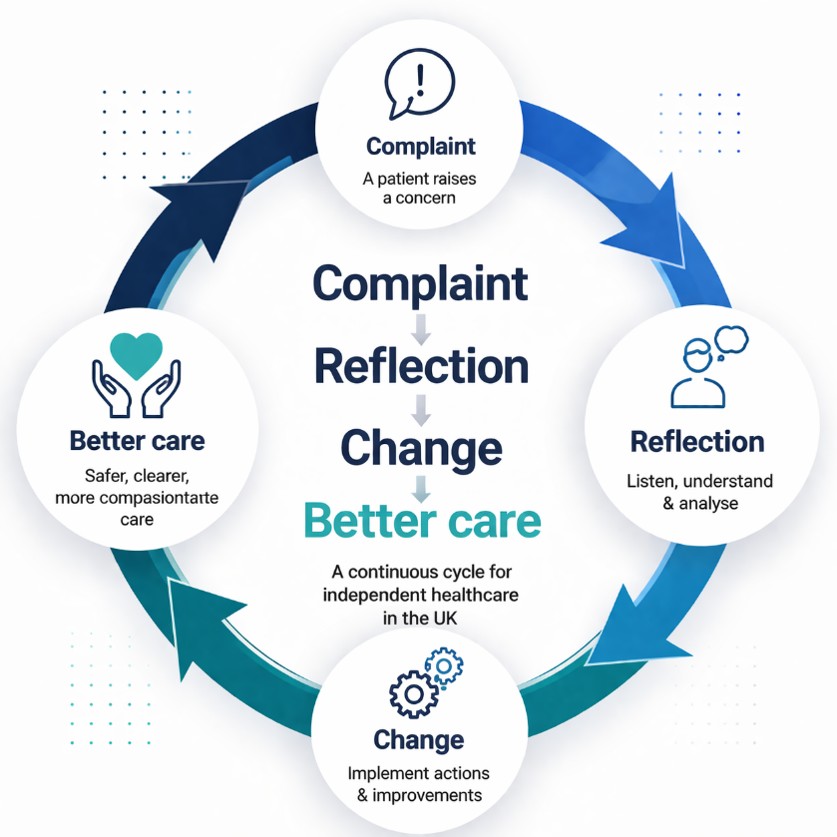
- Reflect?
- Adjust?
- Learn?
Or do we close the process and continue unchanged?
Handled well, complaints are not just part of governance – they are part of professional development. They offer a perspective we rarely see in clinical notes or audit data: how care is experienced, not just delivered.
They can highlight blind spots:
- Where communication didn’t land as intended
- Where systems created friction or confusion
- Where expectations were never fully aligned
None of this diminishes clinical expertise. If anything, engaging with complaints thoughtfully is a marker of it.
The challenge is cultural as much as individual. Do our teams create space to reflect openly on complaints, without blame? Do we treat them as learning opportunities, or as issues to be contained?
Because the real risk is not the complaint itself.
It’s the missed opportunity to learn from it.
👉 Complaints can make us better – if we are willing to engage with them, not just resolve them.